

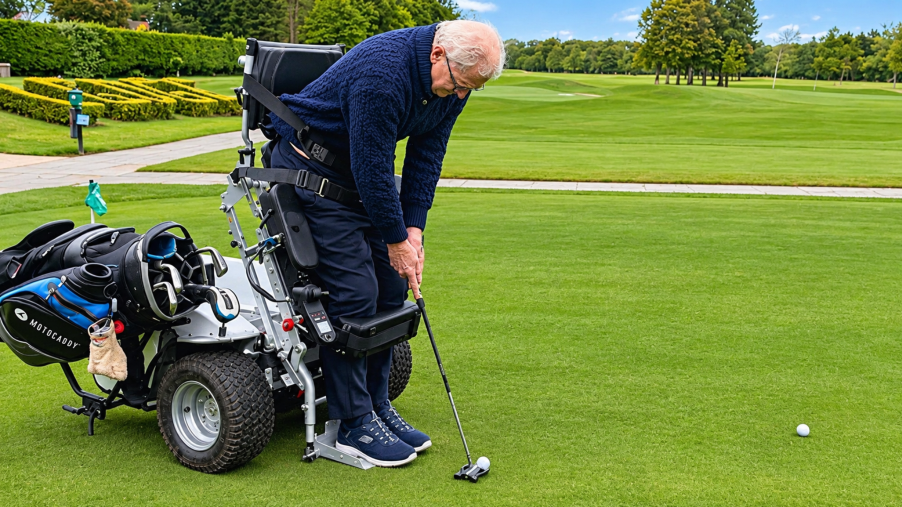
In modern sport, inclusivity has become an important consideration in expanding participation and creating competitive opportunities. The development of golf for players with disabilities reflects a gradual shift from limited recreational access towards more structured participation and competitive recognition. By adapting equipment, playing techniques, and training methods, the sport is creating opportunities for individuals with diverse physical capabilities. This progression demonstrates that physical limitations need not prevent participation in a technically demanding sport.
A significant dimension of this development lies in technological innovation. Specialised golf clubs, prosthetic devices, and mobility-support equipment enable players with different physical abilities to participate more effectively. Adaptive golf carts and single-rider mobility devices can improve movement across playing areas, particularly for individuals with limited mobility. These innovations reduce practical barriers while preserving the fundamental requirements of golf, including precision, coordination, concentration, and strategic decision-making. Consequently, technological advancement has become an important contributor to greater participation.
The expansion of organised competitions has further strengthened opportunities for players with disabilities. Dedicated tournaments, specialised coaching, and appropriate competition formats provide avenues for skill development and performance assessment. International ranking systems have also improved competitive visibility, allowing players to demonstrate their abilities through recognised performance standards. Such developments indicate a progression beyond recreational participation towards greater sporting recognition. Structured competitive pathways can also encourage talent development and sustained involvement in the game.
Despite these advances, accessibility remains essential to the continued development of disability golf. Adapted facilities, accessible practice areas, trained instructors, and suitable playing conditions influence the quality of participation. Financial constraints and the cost of specialised equipment can, however, restrict access, particularly for individuals with limited resources. Limited awareness of available programmes may create additional barriers. Addressing these challenges requires affordable training opportunities, improved infrastructure, and greater institutional support to ensure that participation is not restricted by preventable obstacles.
Beyond competitive performance, golf can contribute to psychological well-being, social interaction, and personal independence. Regular participation may strengthen confidence, encourage perseverance, and provide opportunities to develop meaningful social connections. Furthermore, the achievements of players with disabilities challenge conventional assumptions about athletic potential. By recognising individual capabilities rather than focusing exclusively on physical limitations, the sport can promote greater acceptance and broaden public understanding of inclusive sporting participation.
The future development of golf for players with disabilities depends upon sustained efforts to expand access, improve training, and strengthen competitive opportunities. Technological innovation must be accompanied by affordable equipment, accessible facilities, and greater awareness of participation pathways. These initiatives can foster an environment where players of varying abilities can enjoy recreational golf and strive for competitive success. Thus, the development of disability golf represents a broader transformation in sporting participation, demonstrating how accessibility and opportunity can contribute to a more inclusive future for the game.
Sources:
Design & Develop by Easy Solutions 360